
What Claude Code Means for the Future of Apps
On vibecoding and the death of apps
Claude Code has made the development process for building apps incredibly easy. Any semi-professional coder can develop a production-grade web or mobile app. And almost anyone can create a good-enough-to-use app.
So, for example, if I want to create a new workout app for myself — and this is actually something I did; I built a custom tracking app for just my workouts exactly the way I like it — so I can say to Claude Code: “Build me a workout app. Use the functionality of Hevy, PUSH, and Strong; follow Apple's human interface guidelines to make it look like an Apple app with Apple UI; track my workouts the following way — here's a csv export of my last 100 workouts from Strong — and make it easy for me to re-enter new ones and to adjust them; build me pretty graphs and charts to track my progress; integrate Claude via API to have intelligent weight increment suggestions so I'm always making progress and I know when to progress; add in whatever other features you can think of — calculate strength scores; read scientific papers to figure out what the right way to do strength scores by body part is; do a human body diagram so it can just show which muscles are working most similar to PUSH; connect to Apple Health and Whoop if possible to keep records of calories burned.”
I didn't put all of this in one prompt, but I put a lot of it in one prompt, and I immediately got a working app delivered and iterated until it got to what I wanted.
With new versions being released each month, Claude Code and other vibecoding apps — such as Codex, v0, Lovable, Bolt, etc — vibecoding is getting easier and easier, and the amount of code knowledge one needs to be able to create production-grade apps is reducing.
But what does this mean for product?
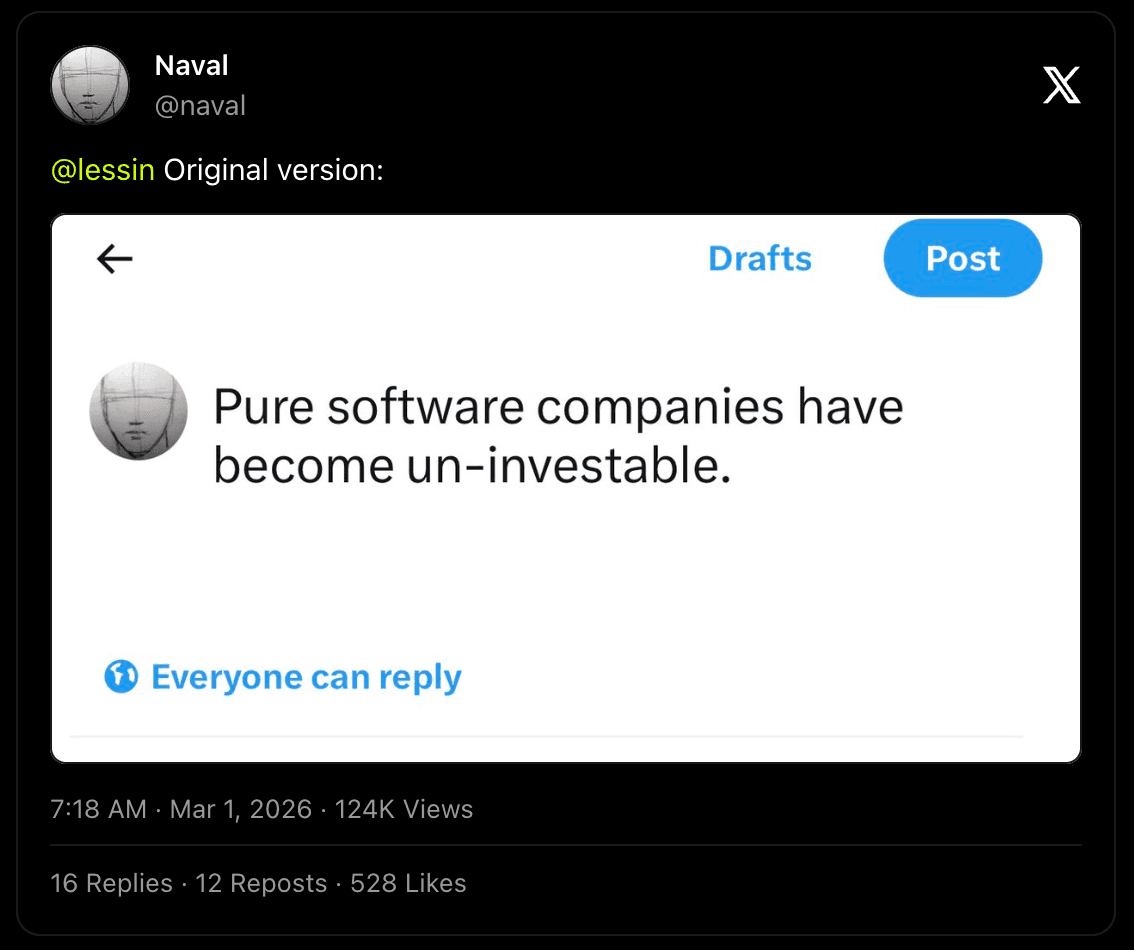
“Pure software companies have become un-investable.” When Claude Code and other coding agents become good enough to build scalable production-grade software with good architecture and backends (which will likely be before 2027), we will see a massive jump in the amount of people and companies using their own custom-coded software.
We did this ourselves, building a project management software for ourselves because we were tired of endlessly switching between Notion, ClickUp, and Google Sheets just to handle our day-to-day company operations. None of the ‘all-in-one’ softwares out there matched our exact use cases so we just built our own. And with Claude Code and our design and development team all working together, within 2 days we had our new software ready.
Eventually as the code knowledge and effort bar for building production-grade apps decreases, custom software will begin to dominate. They are simply able to provide more value; they can give the niche features that users/companies want and remove unneeded fluff that they don't need. And it can always be further customised; you never have to request a new feature in a feedback email and wait until Asana hopefully decides it's worth implementing — you can just get Claude to build it.
This won't stop at business or productivity apps. Everything will begin to get customised. Maybe general use apps like Netflix, Uber, and banking apps will still get used, but many will begin creating their own. They'll create a custom movie streaming app that knows their exact taste, looks the way they want it to look, and acts in a specific unique way they want it to act, and they'll plug it into a Netflix API to fetch the movies themselves from their Netflix account.
Another thing that these coding agents can do that makes them more favourable is they can do things as agents. We have a bug reporting and feature request infrastructure on our custom project management software, where if someone sees a bug or has a feature idea, they create an in-app bug fix or feature request comment and the comment gets filed. Every 24 hours, Claude goes through all the bug reports and feature requests and it just fixes them all and implements all new features by itself, without us having to intervene. And it puts all the fixes into side branches for the development team to review. And then all we have to do is just review the fixes and features and say, “Ah, that wasn't really a bug. That wasn't a good fix. Don't ship that.” or “Oh that's nice. Ship that.” General apps can't compete with this.
Eventually, more and more companies and more and more people will move to using their own custom software. The wave has already started. Prepare accordingly.